
£1.85 – £20.00Price range: £1.85 through £20.00
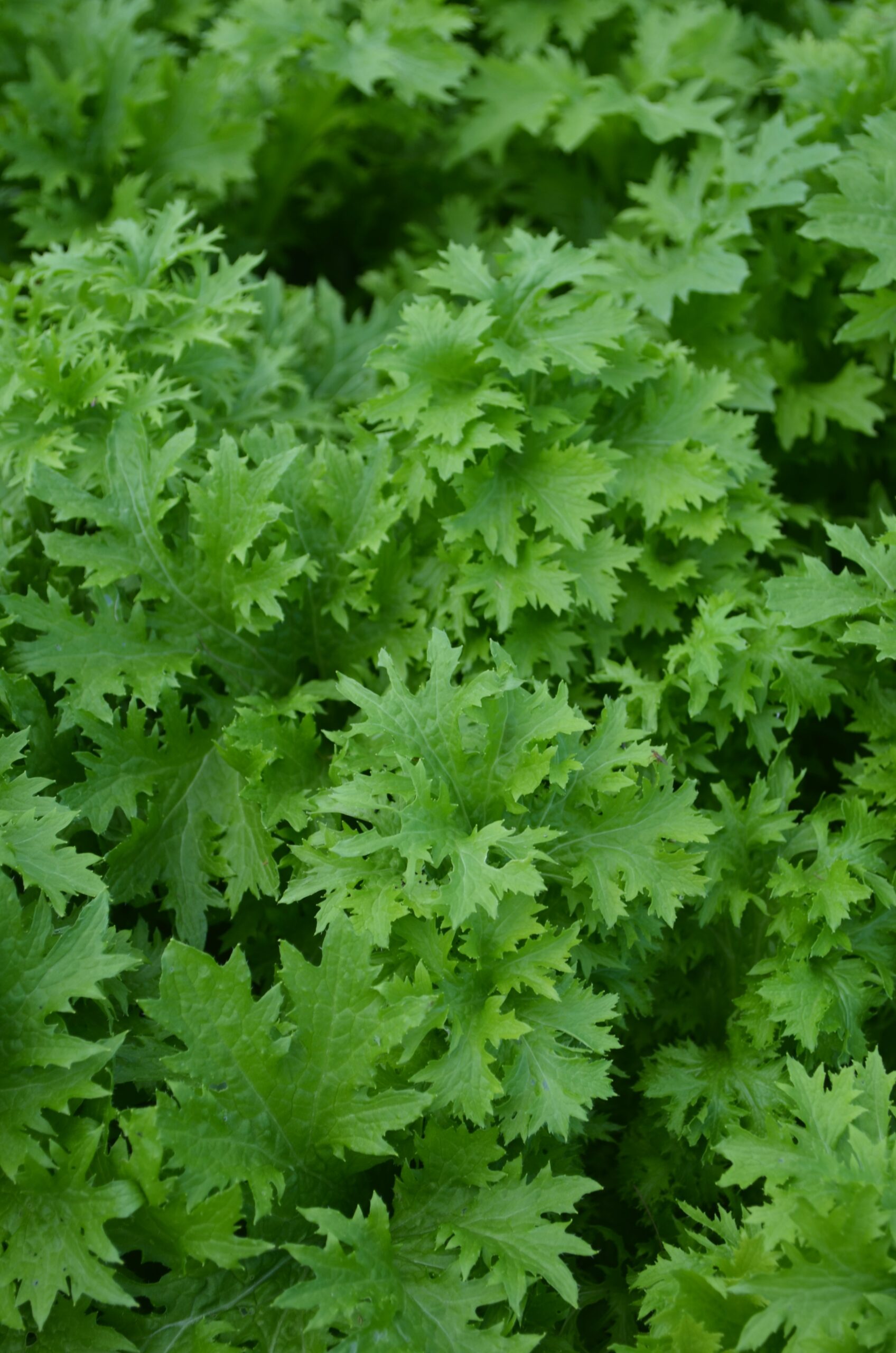
Wasabina has heavily-frilled, light-green leaves with a mild pungent flavour that is reminiscent of wasabi. Young leaves are tender and can be used in salads, whilst older leaves are best cooked in stir-fry and other asian cookery.
Scroll down for more info.
Wasabina
Latin name Brassica Juncea
Approximately 450 seeds per g
Oriental vegetables have revolutionised winter salad production. As their name suggests they come from China and Japan. Being brassica, or cabbage family, the plants are very cold tolerant making them ideal for our autumn and winter months. It also means that some of the varieties have that hot, mustard kick to them. The variation in leaf, colour, shape and texture make them perfect for mixed salad and they are very quick growing too. Most varieties are cut and come again salads while some can also be stir fried.
Wasabina has heavily-frilled, light-green leaves with a mild pungent flavour that is reminiscent of wasabi. Young leaves are tender and can be used in salads, whilst older leaves are best cooked in stir-fry and other asian cookery.
How to grow:
Sow March to May and August to October in open ground. Prepare the soil and sprinkle the seeds over or grow in drills. Thin as necessary. You can use the thinnings in salad or as garnish. Plants may bolt in very hot weather so you may need to avoid mid summer sowings. Later sowings can be grown undercover.
Harvest young leaves three to four weeks after planting and cut larger leaves frequently as required.
Pests and diseases:
Protect the plants from slugs with an environmentally friendly method. Flea beetle may also be a problem. You can protect the plants from flea beetle using fine mesh.
How to cook:
Wasabina is best eaten raw as a salad leaf when young and tender. Larger leaves are great in stir-fries and other Asian cookery.