
£2.25 – £22.00Price range: £2.25 through £22.00
Grown primarily for its parsnip-like root, and often referred to as Hamburg Parsley. An unusual vegetable with a distinctive taste. The leaves can also be eaten.
Scroll down for more info.
Parsley: Halblange (Tuberous-rooted)
Petroselinum crispum
Approximately 450 seeds per g
Parsley is part of the Umbellifer, ( Apiaceae), family like carrots and celery. It is traditionally found in the vegetable section of the seed catalogues rather than the herb section. Perhaps this is because it is traditionally grown in long rows in the vegetable garden where it is always available to harvest.
Parsley has a reputation for being difficult to germinate and methods such as pouring hot water into the planting drill have been advocated in the past and much folklore has been written about it including the assertion that parsley will only grow where the woman of the house is in charge! It is true that parsley seed does not keep well, so use fresh seed for good germination.
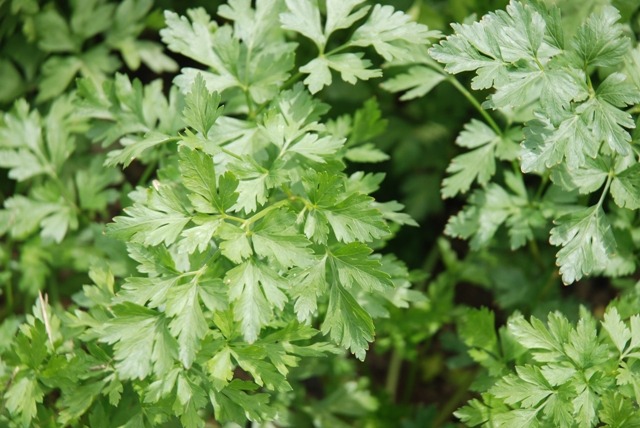
There are three main types of parsley: curly, which is the traditional English type, flat or plain leaved and a tuberous-rooted type, grown primarily for the parsnip like root.
Parsley is biennial, you can leave the plants in over winter to get some early spring pickings but take them out when your new season plants are ready, if left in the old ones will only go up to seed.
Halblange is a tuberous-rooted variety (Sometimes referred to as Hamburg parsley) It is an unusual vegetable with a distinctive parsley-like taste. The roots develop in about 180 days so it can be sown from March through to June for harvest from July to November. The leaves can also be harvested just like leaf-parsley.
How to grow:
Grow in the miscellaneous bed of your rotation or as a border for french or runner beans in your legume section.
Sow seed as a pinch in February in pots or modules, in good organic compost at 13°C. Pot up modules into 8 cm pots and then transplant to their outside position in April.
Later sowing can be made direct into the growing site from April onwards. Make drills 1 cm deep and scatter in the seed.
Thin to a final spacing of 20 – 25 cms.
Pests and diseases:
There are a few fungal diseases that effect parsley. Plant in quite free draining soil, not too close together and try not to water from above.
Aphids can also be a problem but generally parsley is easy to grow and trouble free.
How to cook:
Parsley is extensively used as a garnish or chopped and sprinkled over dishes for its vibrant green colour and fresh flavour.
It is essential, with mint, in tabbouleh and can be used in pesto in place of basil to accompany pasta. It is invaluable to flavour soup.
It makes the classic parsley sauce, traditionally served with fish, but the sauce is also excellent with new potatoes.
.