
£2.65 – £135.00Price range: £2.65 through £135.00
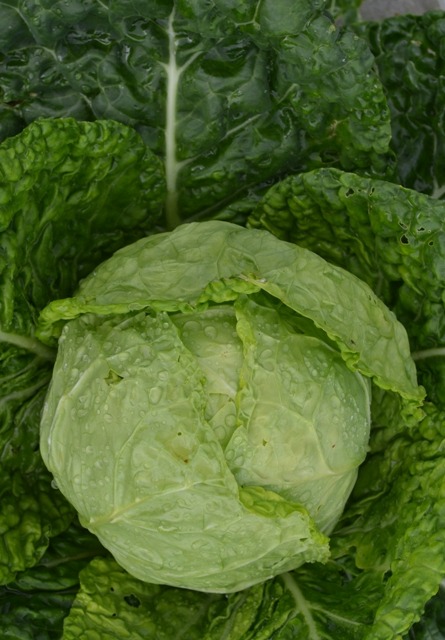
Unique Savoy which can be cropped extremely early. Slightly pointed heads, deep green colour and fine taste. Sow Jan- March, crop from May throughout the summer. Can also be sown later for autumn/winter harvest.
Scroll down for more info.
Cabbage, Savoy Vorbote 3/Hilmar
Brassica oleracea var. capitata
Approx. 250-350 seeds per gram
Cabbage has been cultivated for hundreds of years. The headed cabbage with a dense, closely packed heart comes in many different varieties.
They can be sown at three distinct times of the year so we sub-divide them into Spring, Summer/Autumn, and Autumn/Winter varieties. Combined with their long standing and hardiness we crop cabbage in the garden almost all year round. Cabbages are either round or pointed and come in two colours: green or red.
There is also some variation in leaf texture. Most are smooth but the Savoy types have a blistered texture.
Vorbote 3/Hilmar is a unique savoy cabbage which has been bred for early cropping. It has slightly pointed, deep-green heads and a fine taste. It is usually grown in the same way as a summer cabbage for harvest from May onwards but can also be sown later for a winter harvest.
How to grow:
Grow in the brassica section of your rotation.
Summer-Autumn cabbage can be started very early in the season undercover – January and February – in pots or modules. Later sowings should be made in the brassica seed bed in March and April.
Transplant into the permanent position between March and June up to 45 cm apart. Cabbage can be ready in as little as 60 days from transplant.
Sow Autumn-Winter cabbages in the brassica seed bed in April.
Transplant into the permanent position between May and June up to 45 cm apart. Harvest early Autumn and winter.
Pests and diseases:
The seedlings can be susceptible to slug damage and the older plants can be ruined by cabbage white butterfly caterpillars.
The best way to protect from this is to net with enviromesh during the Summer. Once harvested the stems can be composted but they are very tough. You can pulverise them with a hammer to help them break down faster.
How to cook:
Harvest cabbages as required. Remove the outer leaves and compost them. Cut the cabbage in half and then shred to the desired thickness.
Steam or boil in a little water until tender. Do not overcook. Cabbages are great in stir fry, soup, stews, and with potatoes in Irish Colcannon. Leaves can be stuffed or grated for salads like coleslaw.