
Tamar Organics is happy to be supplying seeds form the bio-dynamic breeding initiative Kultuursaat eV, please see below to view there goals and why we are happy to support them.
 Preservation of open-pollinated Varieties
For decades, open-pollinated varieties of many types of vegetables have been disappearing from the market and hybrids are increasingly dominating seed offerings. This development affects not only the cultivation and thus the supply for the consumers but also the future variety development. Because every new breed is based on one or more existing varieties. In order to preserve the biodiversity of vegetables and to ensure that good seed-proof varieties continue to be available for breeding work, Kultursaat has been running a variety collection for a number of years, the so-called conservation breeding bank.
Long-term conservation breeding under the conditions of organic and biodynamic agriculture is the basis of our work.
Development of new vegetables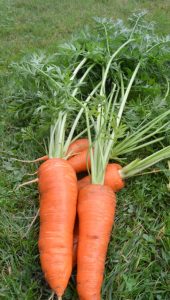
Based on the combination of commercial cultivation and maintenance breeding in a biodynamic farm, new breeding of open-pollinated, ie seed-resistant varieties is one of the declared objectives of Kultursaat. The method of first choice is the positive mass selection, which often leads to success in selection from large stocks. With this procedure, for example, the carrot variety Rodelika was created through strict selection for harmonious shape of turnip and leaf, high sweetness and strong nutty aroma. Even spontaneous “off-types” in a large and otherwise uniform stock can be an interesting starting point for the development of new varieties. Especially with self-pollinators such as tomato, the variety of forms is usually first increased by combination and further developed in the course of selection and single plant progeny in the direction of the desired lines.
In addition to the classical breeding goals of yield and outward uniformity (which are of importance for the vegetable production practice and regulatory approval, eg at the Bundessortenamt), biodynamic plant breeding primarily considers those aspects that are to be assessed positively in terms of food quality. These are in detail:
- seed-resistant (fertile, replantable, open-flowering) varieties,
- Harmony in growth and shape,
- Mature ability
- balanced, intense aromatic taste,
- good rooting and nutrient acquisition capacity,
- Robust natural resistance and high adaptability.
Publication of variety development
Biodynamic plant breeding does not take place under exclusion of the public, but can be visited at any time on the farms and practically experienced. Not the entrepreneurial profit (connected with secrecy), but the development of high-quality food is the leitmotif of the breeding work. The cultivars are “open-source” cultivars developed using peasant-gardening methods, the development of which is not kept secret but published for the purpose of transparency.
breeding research
Variations within a group of forms need not necessarily come about crossing two plants. There is evidence that some of the traits transmitted over generations are not mediated through the DNA of the nucleus. In cult seed, projects with fundamental questions and investigations of such phenomena are also carried out. So we could z. B. observe that the sound of seeds with clay intervals can lead to changes in growth (leaf position, leaf shapes, flowering time, etc.) and plant health in dandelion and lettuce. Sowing, the use of biodynamic preparations and eurythmy (on soaked seeds as well as on the growing plant) are also investigated in terms of their influence on plant growth.